You’re standing at the kitchen sink, rinsing after breakfast, when a faint pink swirl disappears down the drain. No pain. No throbbing. Just a little blood you’ll forget by lunchtime. But that harmless moment is the quietest alarm your body will ever sound—because gum disease doesn’t announce itself with a scream. It works in whispers, eroding bone and loosening the foundation of your teeth for years before you feel a single jolt. By then, the fix isn’t a simple cleaning; it’s a bone graft or an implant—procedures that can cost thousands out of pocket. And here’s what the glossy articles won’t tell you: Medicare covers almost none of it unless you know the exact loophole that shifts a “cosmetic” procedure into a “medically necessary” one. That single pink swirl holds a warning—and a hidden path to affordable care most dentists never mention.
The Silent Threat: Why Gum Disease Sneaks Up on Your Wallet and Health
You might notice a little blood when you brush, a slight tenderness you shrug off. That’s the trap. Gum disease often has no pain until it has already done serious damage, and by then, your teeth may loosen or your gums may recede enough to expose roots. The gum disease warning signs you can feel—like persistent bad breath or gums that pull away from teeth—are easy to dismiss, yet 70% of adults over 65 have some form of the condition. Most don’t realize that their Medicare plan won’t cover basic periodontal care, leaving them facing bills that shock even the most prepared.
That bleeding is not just a hygiene issue. It’s a direct pathway to your bloodstream. Researchers have linked untreated gum disease to heart inflammation, worsened diabetes control, and even respiratory infections. But the financial blow lands first. The average dental crown cost exceeds $1,500, and many assume their insurance will pay for it. They’re wrong. Standard Medicare Part A and B cover zero routine dental procedures, and even Medicare Advantage plans with dental riders often cap coverage at a paltry $1,000–$1,500 per year—far less than a single implant’s $3,000–$4,500 price tag.
Here’s what doctors and insurance companies don’t advertise: procedures like periodontal scaling, bone grafting, and even some dental implants can be coded as medically necessary. That tiny coding shift can slash your out-of-pocket costs by thousands. Yet most patients never learn to ask for it. If you search for “affordable dental care near me” and find a clinic that accepts Medicare Advantage plans with dental riders, you’re already ahead of the curve. But you still need to know how to push that claim through. Micro-action: Call your dentist today and ask if your deep cleaning can be filed under a medical diagnosis code—not a dental one.
##
That single phone call might save you thousands. But first, you need to recognize what your mouth is telling you right now. The earliest clinical sign doctors watch for isn't pain—it's blood. If your toothbrush turns pink when you spit, that's your gums waving a red flag. Bleeding during brushing or flossing is the hallmark of gingivitis, the reversible stage of gum disease. A standard cleaning costs $75 to $150, and at this point, the damage is entirely preventable.
Ignore it, and that bleeding signals the onset of periodontitis. Now your gums are pulling away from your teeth, creating pockets where bacteria thrive. Treatment escalates to scaling and root planing—a deep cleaning that runs $200 to $400 per quadrant. That's up to $1,600 for your whole mouth. Here's the catch: most original Medicare plans deny coverage for this procedure, labeling it routine dental care. So you're left paying full price, often without realizing a loophole exists.
The trick is in the coding. Periodontal scaling can be billed as medically necessary when linked to conditions like diabetes or heart disease. That shifts it from your dental benefit (which Medicare doesn't cover) to your medical insurance. It's a distinction most providers never mention—and that leaves you scrambling later. If you're searching for "affordable dental care near me," focus on clinics that accept Medicare Advantage plans with a dental rider. Those plans sometimes cover scaling if your doctor provides the right diagnosis code.
Micro-action: Search your Medicare Advantage plan's dental rider online today—look for the words "periodontal maintenance" or "medically necessary dental."
When Gum Disease Becomes ‘Medically Necessary’: The Insurance Loophole That Can Save You Thousands
That search for "periodontal maintenance" might have left you staring at a confusing list of exclusions. Here's what your Medicare Advantage plan won't tell you: the word "cosmetic" is often used to deny coverage for procedures that are anything but vanity. The real gum disease warning signs—like bleeding when you floss, persistent bad breath, or gums pulling away from teeth—are clinical flags that can unlock a different billing code entirely.
The distinction between cosmetic and medically necessary is where the money is. If your dentist links your periodontitis to a systemic condition like diabetes, heart disease, or rheumatoid arthritis, procedures like bone grafting or deep periodontal scaling can shift from "elective" to "medically necessary" overnight. One 68-year-old patient in Ohio had her dentist document how her gum infection was aggravating her uncontrolled blood sugar. That single note turned a $4,000 dental implant—normally excluded by Medicare—into a partially covered medical expense. Her out-of-pocket dropped to $1,200.
Here's the trick most dentists won't volunteer: ask for a "medical necessity letter" that explicitly connects your gum disease to a chronic illness you already treat. Your primary care doctor can co-sign it. Then your dentist submits a treatment plan appeal to your medical insurance—not your dental rider. This works for extractions due to bone loss, bone grafts to save remaining teeth, and even some periodontal surgery. The American Academy of Periodontology estimates that 47% of adults over 65 have severe periodontitis, yet fewer than 1 in 10 ever request this coding shift.
Don't assume your dentist knows this loophole exists. Many still default to dental-only billing because it's easier. You have to push. When you search for "affordable dental care near me," ask each office directly: "Can you code a bone graft as medically necessary if my doctor confirms it affects my heart condition?" If they hesitate, call the next clinic. Some dental savings plans also offer flat fees for periodontal scaling—around $300 to $600 per quadrant—which beats the typical $1,500 without insurance.
**Micro-action: Call your dentist tomorrow and ask for a "medical necessity evaluation." Bring a list of your chronic conditions and request a joint letter with your primary care doctor. That letter is your key to unlocking thousands in coverage.
Dental Crowns, Implants, and the Hidden Costs of Advanced Gum Disease
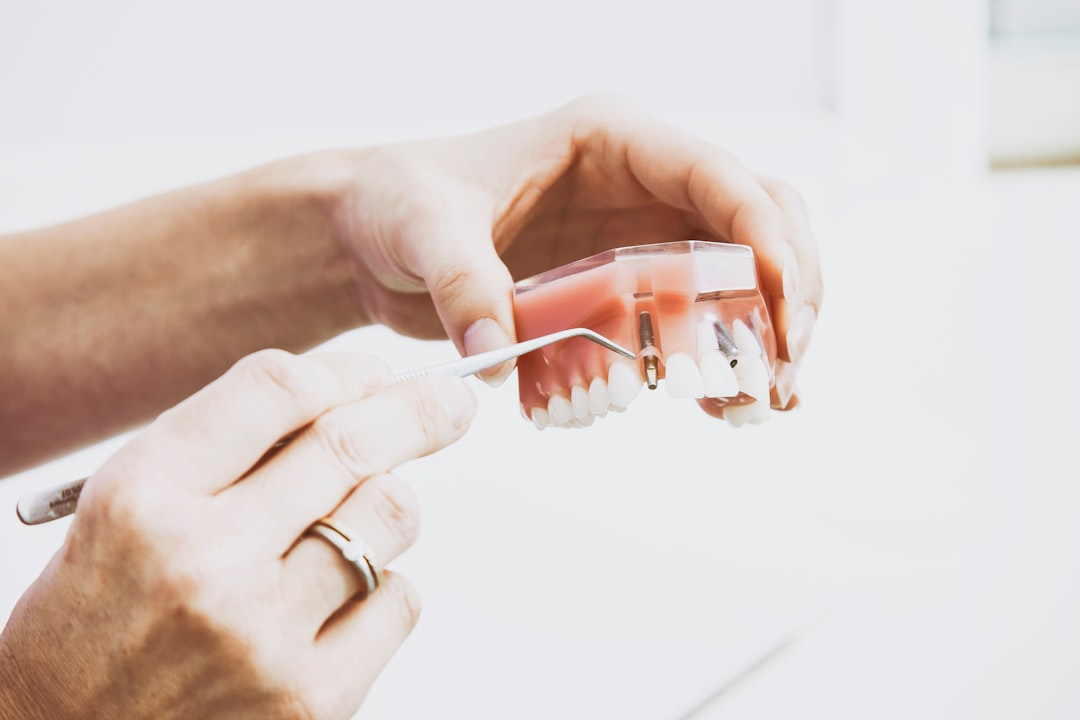
That letter is your key to unlocking thousands in coverage. But it's best used before you're staring at a treatment plan for crowns or implants. When gum disease advances into periodontitis, bone loss becomes irreversible, and your teeth start shifting or loosening. That's when dentists stop talking about a simple filling and start quoting $1,100 to $1,800 per crown and $3,000 to $4,500 per tooth for an implant.
Here's the dirty truth most dentists won't tell you: those price tags assume you're paying cash. Many patients panic after hearing those numbers and immediately search "affordable dental care near me"—only to find clinics that still charge $800 just for the consultation and X-rays. But if you know the right questions to ask, you can flip the script. Start by asking your dentist directly: "Can you code this as medically necessary?" If the answer is no, ask why not. Periodontal disease is a diagnosed infection, not a cosmetic preference.
The difference between a $4,500 implant and a $1,200 one often comes down to how your treatment plan is written. A properly worded "medical necessity letter" can shift bone grafts, extractions of non-restorable teeth, and even the implant surgery itself into a category your Medicare Advantage plan with a dental rider might partially cover. Some patients have gotten 50% to 70% reimbursement simply by having their periodontist document the infection, bone loss, and risk to adjacent teeth. Don't accept the first quote. Insist on a written treatment plan with separate line items, then ask if each one can be appealed as medically necessary under your plan's dental rider or even your Part B benefits if the disease is severe enough. The warning signs of gum disease—bleeding, recession, looseness—are the very evidence you need to build that case. Ignore them, and you're paying full freight.
Your Action Plan: How to Get Gum Disease Treatment Without Breaking the Bank
Ignore them, and you're paying full freight. But here's the counter-punch most dentists won't tell you: you have options that can slash your bill by 40–60%. The first step is searching "affordable dental care near me"—not for a coupon, but for dental schools and federally qualified health centers. At a dental school, a supervised student might perform your periodontal scaling for $200–$400, versus $1,000–$3,000 at a private practice. Federally qualified health centers charge on a sliding scale based on your income, often $50–$100 per visit. Both are legitimate, licensed options that treat gum disease warning signs before they escalate.
Once you have a diagnosis, demand a written treatment plan and specifically ask your dentist to code each procedure for medical necessity. Periodontal scaling, bone grafts, and even some dental implants can shift from "cosmetic" to "medically necessary" when linked to systemic conditions like diabetes or heart disease. That coding is the difference between paying $3,000–$4,500 per implant out-of-pocket and potentially having it covered under your medical insurance. If you have Medicare Advantage, check your plan's dental rider—many cover two cleanings and X-rays annually, but some include up to $1,500 toward periodontal treatment. Don't assume; call and ask specifically about "periodontal scaling" and "bone grafting" coverage.
If your plan falls short, dental savings plans are the overlooked alternative to insurance. For an annual fee of $100–$200, you get 10–60% off at participating dentists, with no waiting periods or claim denials. One deep cleaning that would cost $1,500 could drop to $600. Compare that to the cost of delaying treatment: untreated gum disease leads to tooth loss, and replacing one tooth with an implant runs $3,000–$4,500. A full-mouth restoration? $20,000–$45,000. The math is brutal but clear.
Here's your micro-action: Call your dentist today and ask, "Can you code my gum disease treatment as medically necessary?" If they hesitate, find one who will. Your health—and your wallet—depend on it.
The single most specific action you can take today is to floss one tooth—just one—and notice the scent of the floss thread afterward; if it smells like decay or blood, your immune system is already fighting a battle beneath your gums. Success looks like a lifetime of cleanings that feel like routine maintenance rather than emergency salvage, where your dentist smiles instead of sighs. But here’s the unsettling part: that warning sign—a little bleeding, a faint odor—is often the last whisper before the silence breaks. What else might your mouth be telling you without a sound?